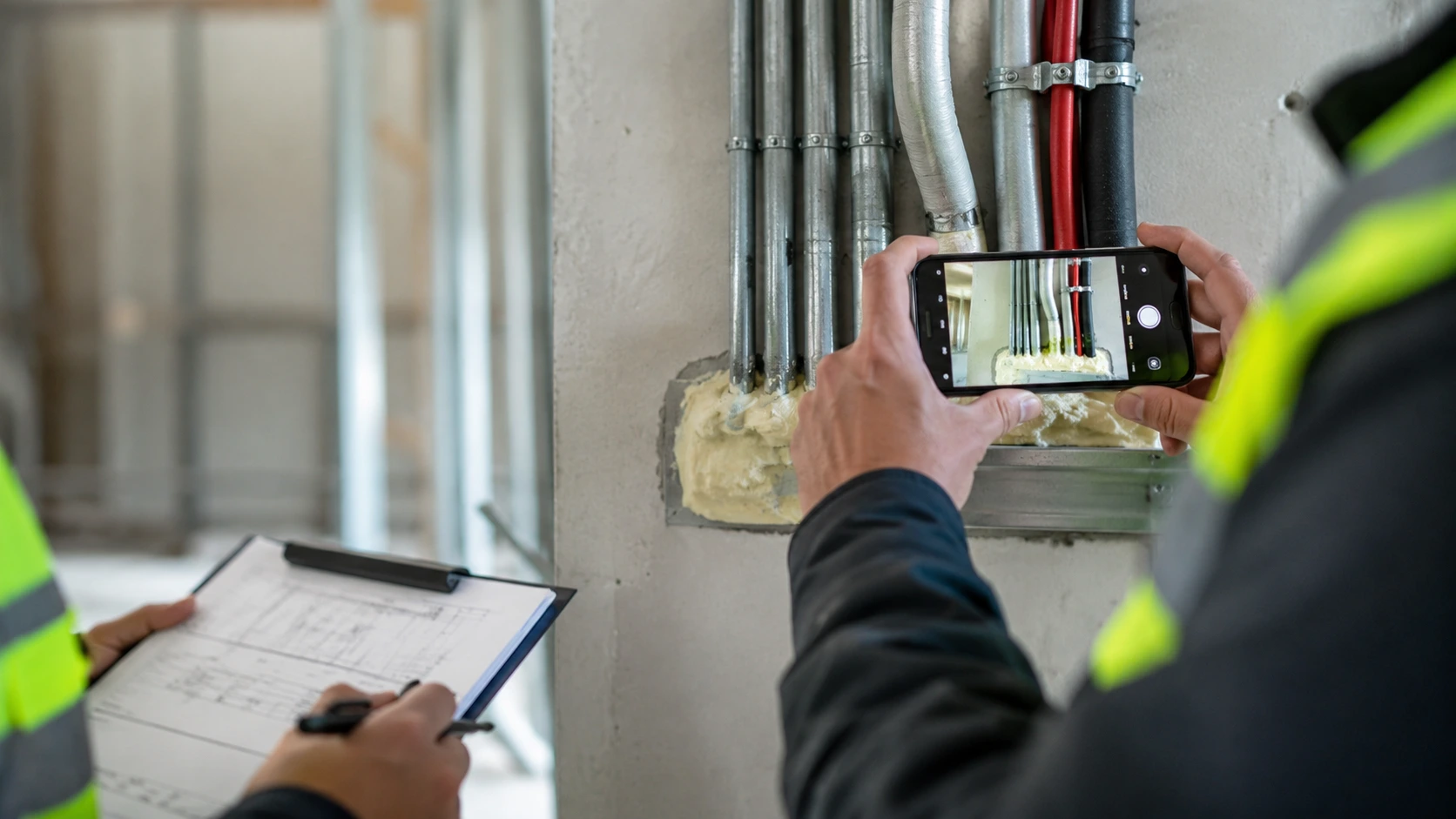
A construction project can generate thousands of photographs, certificates, drawings, inspection reports and emails.
Yet when a client, consultant or certifier asks a simple question—
"Can you show that this work meets the project requirements?"
—the answer is often surprisingly difficult.
The problem is rarely a lack of documentation. The problem is that the documentation is disconnected.
Documentation Is Not the Same as Proof
Imagine a contractor installing a fire-rated door.
The project may contain:
- photographs of the installed door;
- a manufacturer's certificate;
- a delivery note;
- an inspection checklist;
- a commissioning report.
Each document has value.
However, unless they are connected, they cannot clearly demonstrate:
- which project requirement they relate to;
- where the door was installed;
- which acceptance criteria were checked;
- who performed the inspection;
- whether any defects were identified;
- whether those defects were corrected;
- who finally accepted the work.
Having documents is not the same as proving compliance with the project requirements.
What Makes Construction Evidence Meaningful?
Evidence becomes valuable when it answers the questions that reviewers naturally ask.
For every important item of work, the project team should be able to demonstrate:
What was required?
- The relevant specification, drawing, contract requirement or certification criterion.
Where was the work carried out?
- The exact building, floor, room, façade, roof area or building element.
What evidence was collected?
- Photographs, measurements, certificates, test reports or inspection records.
Was the evidence evaluated?
- Someone must compare the evidence against the acceptance criteria—not simply collect it.
What happened if something was wrong?
- If a defect or non-conformance was identified, the record should also show:
- the issue;
- the corrective action;
- the replacement evidence;
- the reinspection;
- the final approval.
Only then does the documentation become a complete verification record.
Common Problems
Many projects experience similar issues:
- photographs without context;
- certificates that cannot be linked to the installed product;
- inspections completed after work has already been concealed;
- defects recorded without evidence of correction;
- corrected work accepted without reinspection;
- handover folders containing hundreds of files but no clear audit trail.
These problems increase the time required for reviews, create uncertainty during handover and make later investigations much more difficult.
Key Takeaways
A contractor should be able to demonstrate more than simply "work was completed".
A reliable verification record connects:
- the project requirement;
- the completed work;
- the collected evidence;
- the evaluation;
- any issues and corrective actions;
- the approval decision;
- the handover record.
This creates confidence that the work has been assessed against the project requirements rather than merely documented.
How VerityHub Helps
VerityHub is designed to support structured construction verification rather than simple document storage.
Instead of treating photographs, certificates and inspection reports as separate files, VerityHub connects them through a single verification workflow:
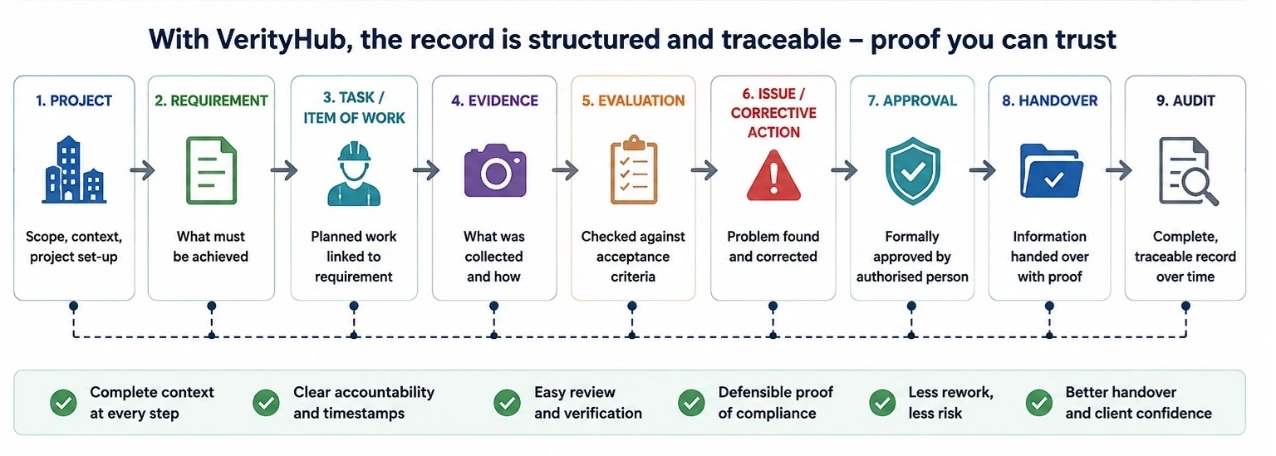
This allows every piece of evidence to be understood within its full context.
For example, a reviewer can immediately see:
- which requirement the evidence supports;
- where the work was carried out;
- who submitted the evidence;
- who evaluated it;
- whether any issues were raised;
- how those issues were resolved;
- whether the work is ready for handover.
VerityHub does not replace professional judgement or certification. Decisions remain with the contractor, engineer, quality manager, Clerk of Works, consultant or certifier.
Its purpose is to make those decisions transparent, traceable and supported by a complete evidence record.
Next in the Series
Why Photographs Alone Are Not Proof of Construction Quality
A photograph can show what something looked like at a particular moment—but what can it actually prove?
In the next article, we'll explore why photographs often fail as evidence on their own and what additional context transforms them into meaningful construction records.