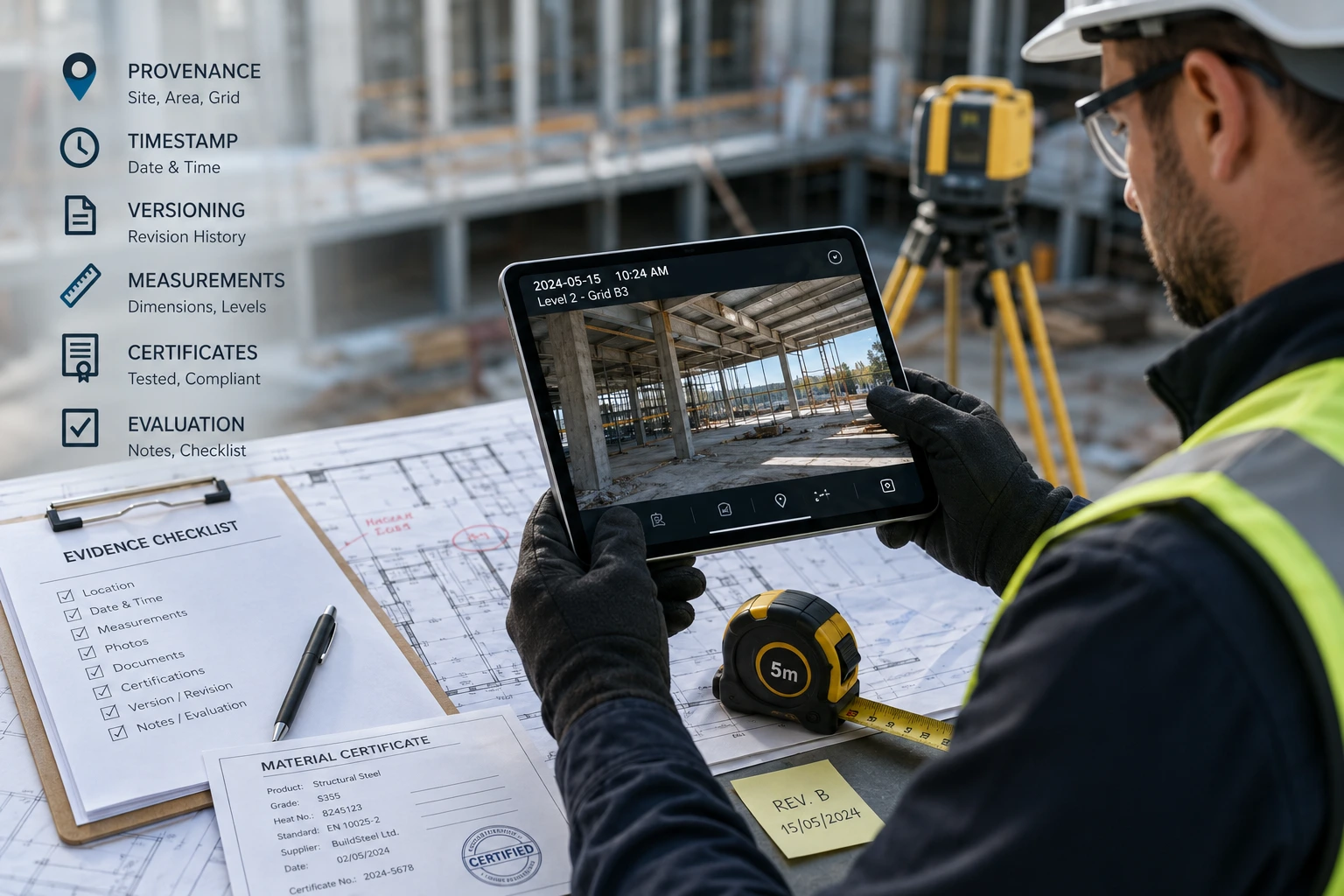
Site photographs are useful. They can record progress, visible workmanship, product labels, dimensions, defects and conditions before work is concealed.
But a photograph does not automatically prove that the work meets the project requirements.
It is one piece of evidence. Its value depends on what it is intended to show, how well it is connected to the work, and how it is evaluated.
1. The problem
Small and medium-sized contractors often rely on photographs because they are quick, familiar and practical.
The difficulty appears later.
A project folder may contain files such as:
IMG_3847.jpg
Room-2-final.jpg
Insulation-complete-3.jpg
Several weeks or months afterwards, a contractor, consultant or client may struggle to establish:
where the photograph was taken;
which element or installation it shows;
which requirement applied;
whether the work was complete;
whether the image was taken before or after correction;
who captured or submitted it;
and what decision was made from it.
The image may be an unaltered record of what the camera captured, but its evidential value remains limited when the project context is missing.
Close-up without context

Image: A close-up of insulation, fire stopping or an airtightness detail where the room or location cannot be identified.
Caption:
A close-up may show workmanship clearly while providing no reliable indication of the building, room or element being recorded.
2. Why it matters
A photograph records visible conditions within the limits of the camera angle and the moment of capture.
It may not show:
concealed surfaces or fixings;
the complete extent of the installation;
the installed product or batch;
the full thickness or dimensions;
the method used;
subsequent damage or alteration;
or whether the work satisfied the acceptance criteria.
For example, a photograph may show insulation between timber studs. It may support the claim that insulation was present in the photographed area.
It may not establish that:
the specified product was used;
the required thickness was achieved;
gaps were absent outside the frame;
junctions were completed correctly;
or an authorised person accepted the work.
The correct question is not:
“Do we have a photograph?”
It is:
“What specific claim does this photograph support, what does it not show, and what additional information is needed to evaluate the work?”
3. Technical example: airtightness testing
An airtightness test illustrates the limitation clearly.
A photograph of a blower-door fan may show that testing equipment was present. A photograph of the display may show a number.
Neither image, by itself, establishes a valid test result.
A meaningful record may also require:
the building or test-zone identity;
the construction stage;
the test method;
the conditioned volume;
the envelope area;
the applicable target;
the equipment and calibration details;
the measured values;
the formal test report;
and the evaluator’s conclusion.
The same principle applies to fire stopping, structural fixings, service penetrations, airtightness membranes, fire-rated doors and other safety- or performance-critical work.
The photograph supports the record. It does not replace the technical method, measurement or professional judgement.
Airtightness test
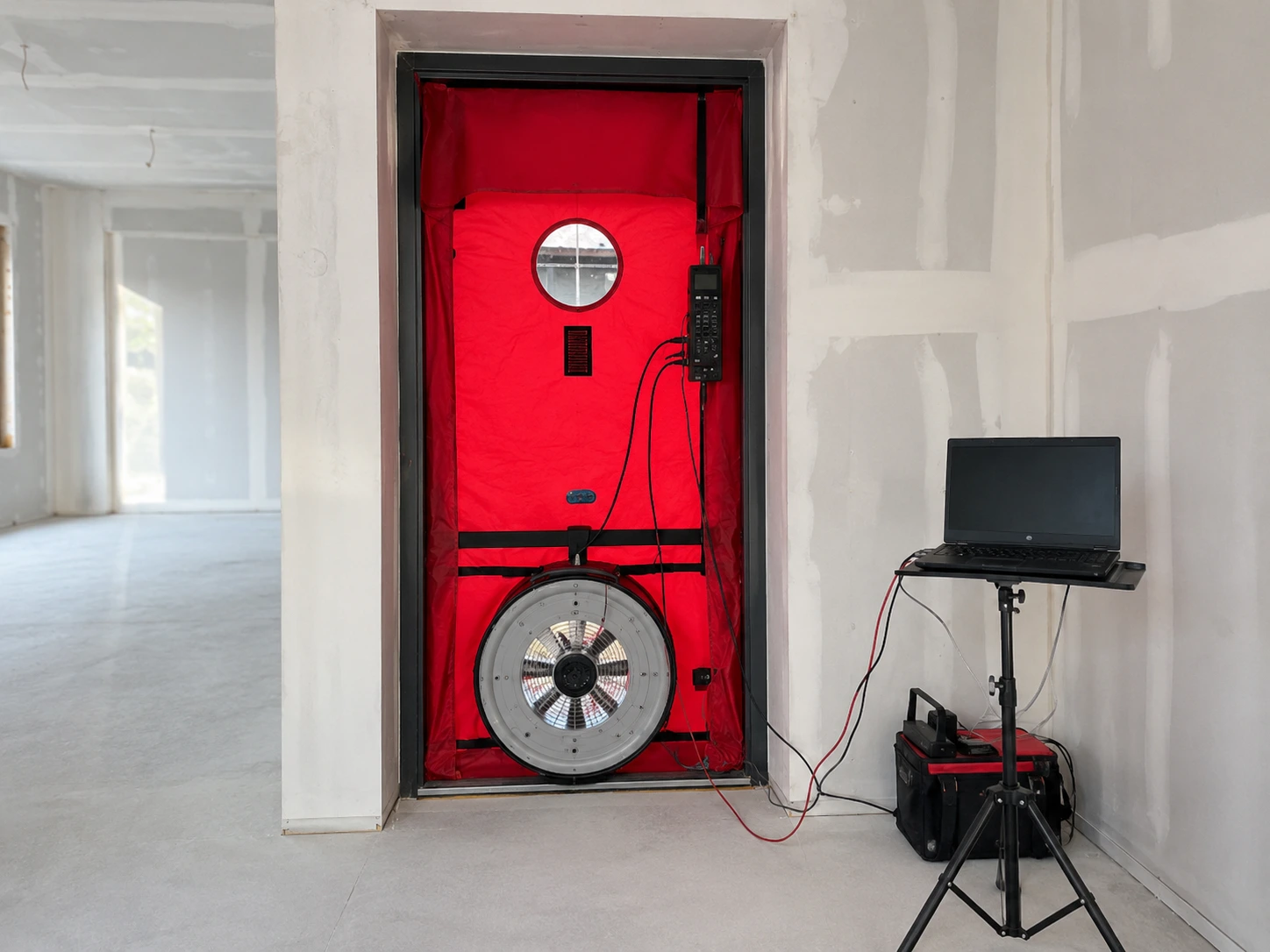
Image: A blower-door installation with the test area visible.
Caption:
The image records that testing equipment was present. The result still depends on the test zone, method, target, building data, measured values and competent interpretation.
4. What makes a photograph useful evidence?
A practical site-photo record does not need to become a heavy administrative process.
For important work, a contractor can usually improve its evidential value by recording:
An overview photograph showing the location and surrounding context.
A close-up photograph showing the critical detail.
Product identification or measurement, where relevant.
The controlled project location, such as building, floor, room, zone or element.
The applicable requirement and task.
A short description of what the photograph is intended to demonstrate.
The resulting record should connect:
Requirement → Verification criterion → Task or Item of Work → Location → Photograph → Capture and submission details → Evaluation
Depending on the work, it may also require a drawing revision, certificate, measurement, test result or corrective-action record.
Four checks for photographic evidence
Relevance
Does the photograph relate to the correct requirement, task and location?
Provenance
Who captured it, when was it captured, who submitted it, and was it taken directly or uploaded later?
Sufficiency
Does it show enough to assess the relevant criterion?
Integrity
Has the submitted file, its source and its later replacement or revision history been preserved without silently rewriting the record?
Passing these checks does not make the work acceptable. It means the photograph has enough traceable context to be considered as part of an evaluation.
File integrity also does not prove that the work was correctly described or technically acceptable.
Overview and close-up pair
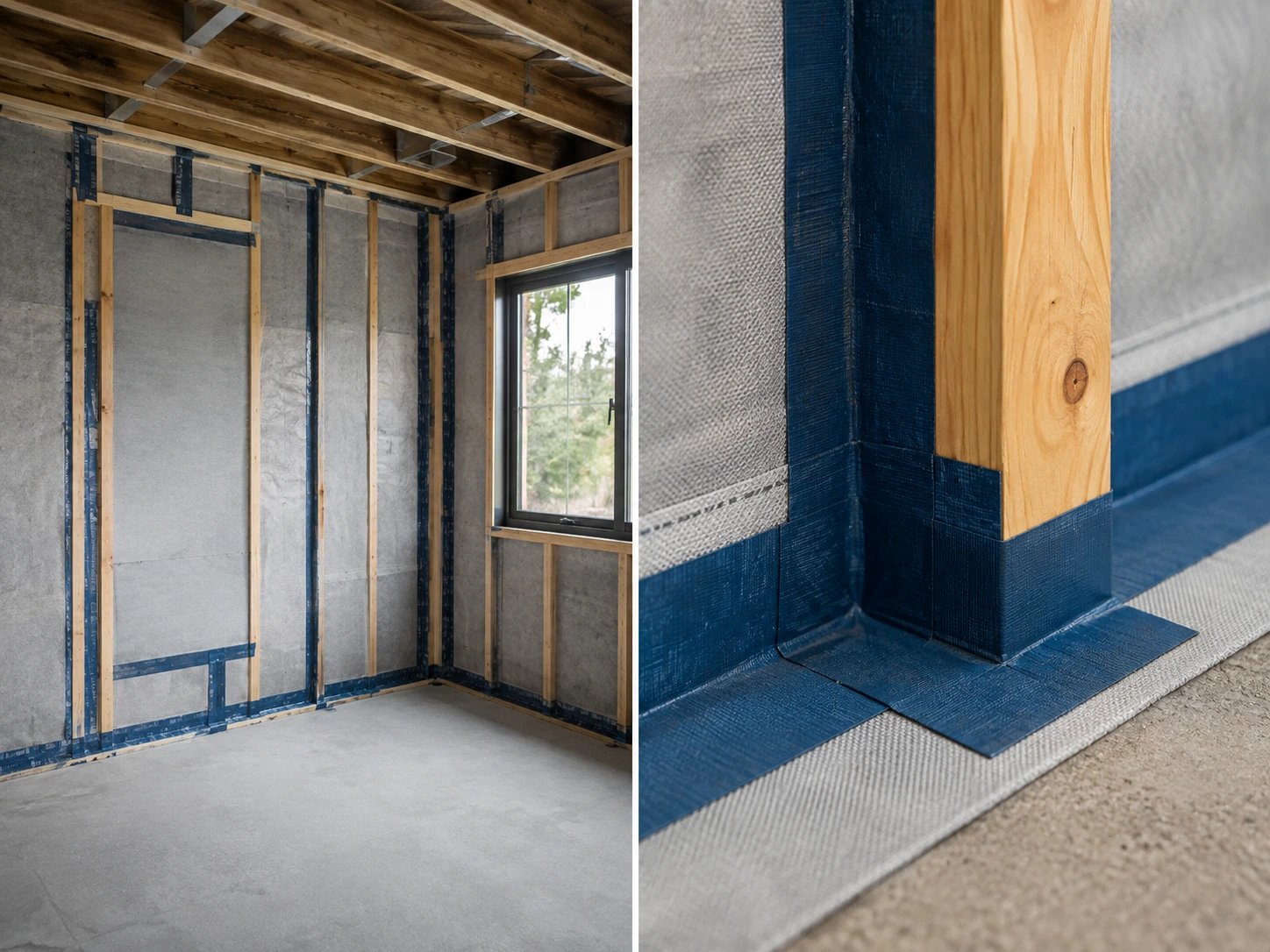
Image: Two photographs shown together: one overview of the location and one close-up of the critical detail, ideally including a room reference, product label or measuring scale.
Caption:
The overview establishes location and context; the close-up records the critical detail. Product identification or measurement may still be required before the work can be evaluated.
5. Common mistakes
Common weaknesses include:
a close-up with no identifiable location;
an overview with no useful technical detail;
photographs taken only after work has been covered;
unrelated images attached to one generic task;
an image submitted without stating what it is intended to show;
capture time and upload time being treated as the same event;
later evidence replacing earlier evidence without preserving the history;
a photograph being treated as accepted merely because it was uploaded;
approval being recorded without clear criteria or appropriate authority.
GPS and device timestamps may support provenance, but they are not sufficient on their own.
GPS is often unreliable inside buildings, and a timestamp does not establish technical correctness. A controlled project location, clear evidence source and evaluation record are usually more useful.
6. How VerityHub helps
VerityHub is designed to treat a photograph as a structured Evidence record rather than as an isolated file.
The record can be connected to:
the Project;
the applicable Requirement and verification criterion;
the Task or Item of Work;
the Asset, Zone or Location;
the person who captured the image, where known;
the original capture time, where available;
the person who submitted it;
the upload or submission time;
the capture, upload or import method;
the relevant evidence version;
the evaluation decision;
any Issue or Corrective Action;
the Approval and Handover record.
This supports a traceable chain:
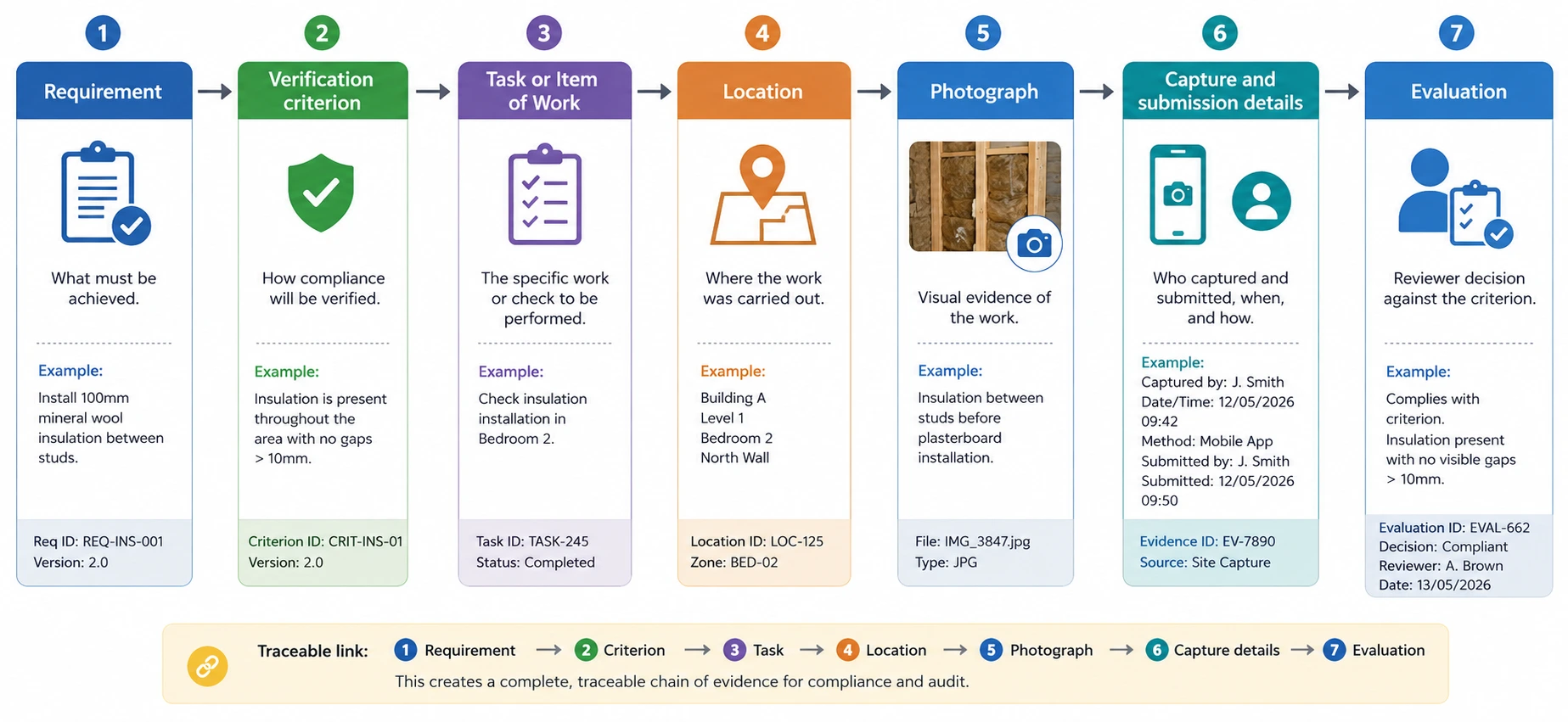
Requirement → Task → Evidence → Evaluation → Issue or Corrective Action → Approval → Handover → Audit
A reviewer can then see:
what the photograph was intended to demonstrate;
where the work was carried out;
which requirement version applied;
whether the image was captured directly or uploaded later;
how it was evaluated;
whether a problem was identified;
what was corrected;
and who approved the outcome.
Where evidence is replaced or supplemented, the earlier version and its evaluation history should remain visible. An evaluation must relate to the evidence that was actually reviewed; it should not silently transfer to a later file.
VerityHub can improve structure, traceability, version history and accountability. It cannot independently guarantee that a photograph is truthful, that the work is technically correct or that legal or contractual compliance has been achieved.
Those conclusions still depend on:
appropriate evidence;
defined acceptance criteria;
suitable inspection or testing;
competent evaluation;
and the authority of the person making the decision.
Key takeaway
A photograph can support a specific claim about construction work, provided that the claim and the photograph’s limitations are clear.
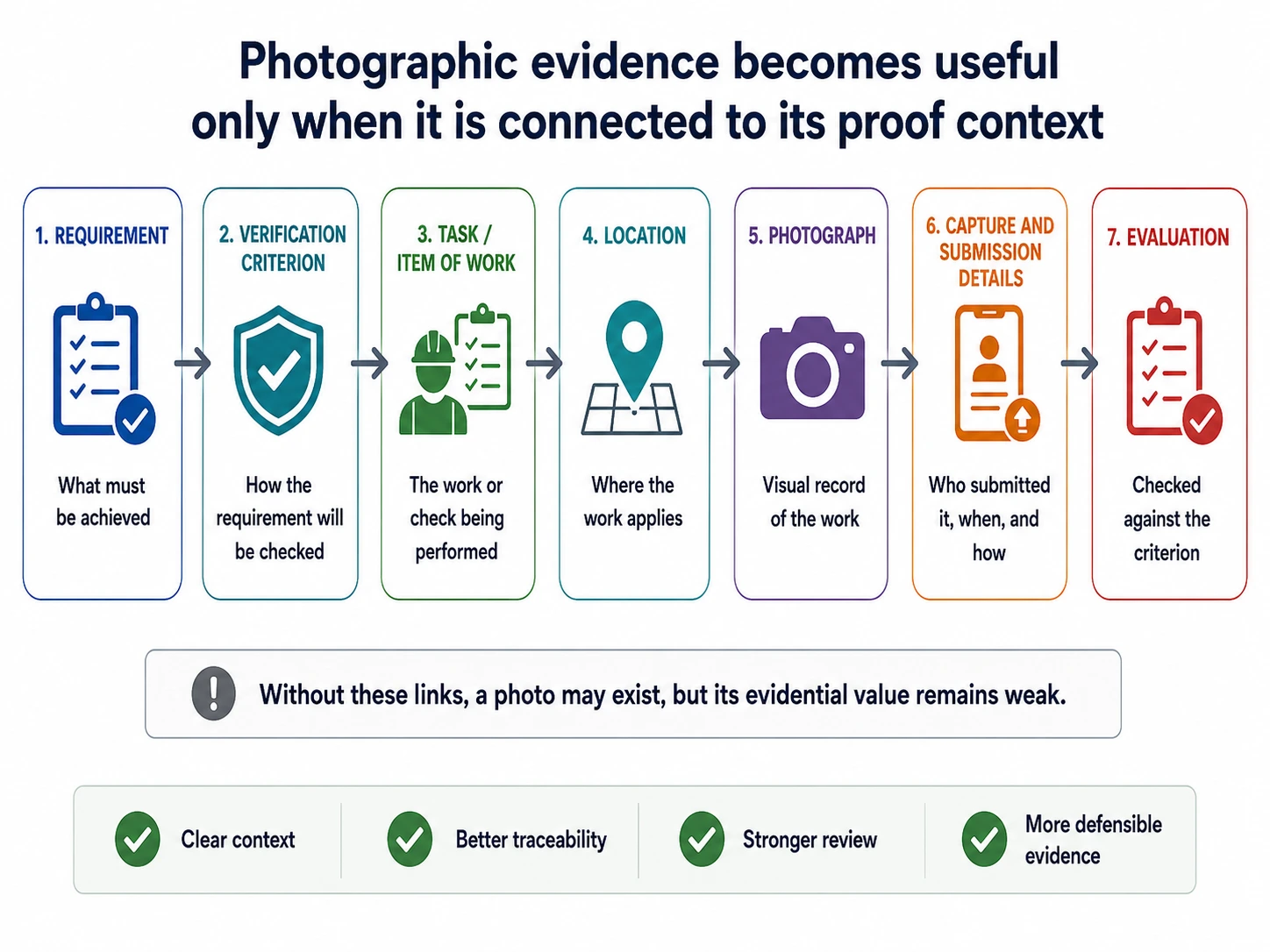
A defensible record explains:
what was required, where it applied, what the photograph shows, what it does not show, how it was evaluated and who accepted the outcome.
That is the difference between collecting site photos and building useful construction evidence.
Next in the series
What Makes Construction Evidence Reliable?
A photograph is only one form of evidence.
The next article will examine provenance, location, versioning, measurements, certificates and evaluation—and explain what makes a construction record reliable enough to support a decision.